
Chai Education
Chai Something New
Tea is woven into the traditions of people across the world. There are many varieties of tea and seemingly countless ways to prepare it but we’re here to talk about chai. More specifically, masala chai, which is a staple throughout India. And even in this one country, chai traditions and preferences have wonderful diversity. So let’s dive into some definitions, history, benefits, and traditions around this important beverage.
Definitions
Chai: Derived from the Hindi word for tea (also spelled "chá" or "chay," depending on the region or language)
Masala Chai: A beverage made with black tea, spices, milk, and sugar. Spice blends vary depending on who is making it and will taste layered and complex.
Karak Chai: A beverage using less spices and more tea leaves than masala chai. It usually tastes creamier, slightly sweeter, and stronger than masala chai. In Hindi, karak translates to “strong.”
Kulhad: A traditional, handleless, clay cup used across South Asia to serve hot beverages like chai
A Little HistoryThe tea plant (camellia sinensis) is indigenous to a stretch of land that, today, covers South West China, Northern Burma/Myanmar and North East India. If we back up to the 1700s, China had a monopoly on the tea trade, as they were the ones who had cracked the code on how to cultivate it and manufacture it. As the drink became increasingly popular, China’s stronghold on the market began to frustrate major importers. The main agitated party? England.
During the late 1700s and into the early 1800s, England loyalists not only stole China’s tea plants and seeds, they also stole the secrets behind their successful manufacturing processes. Even some tea specialists were smuggled out! Their schemes were successful and by the mid 1800s, England had its very own tea industry set up in India.
Jump ahead to the 1900s and while tea is still a very popular drink among English colonizers in India, it was not popular among Indians. However, once some rough times hit the global market, India was left with a large surplus of tea. The drink started to become popular in Indian society but they made it their own – making tea with milk, spices, and sweeteners. Thus, masala chai was born!
Now chai is a deep part of Indian culture and everyday traditions. You’ll find it served on the street, in restaurants, and in Indian households. Chai will even be different from region to region, each having their own take on how to prepare it and what spices to add. But we can all agree that there is nothing better than enjoying a fresh cup of chai.
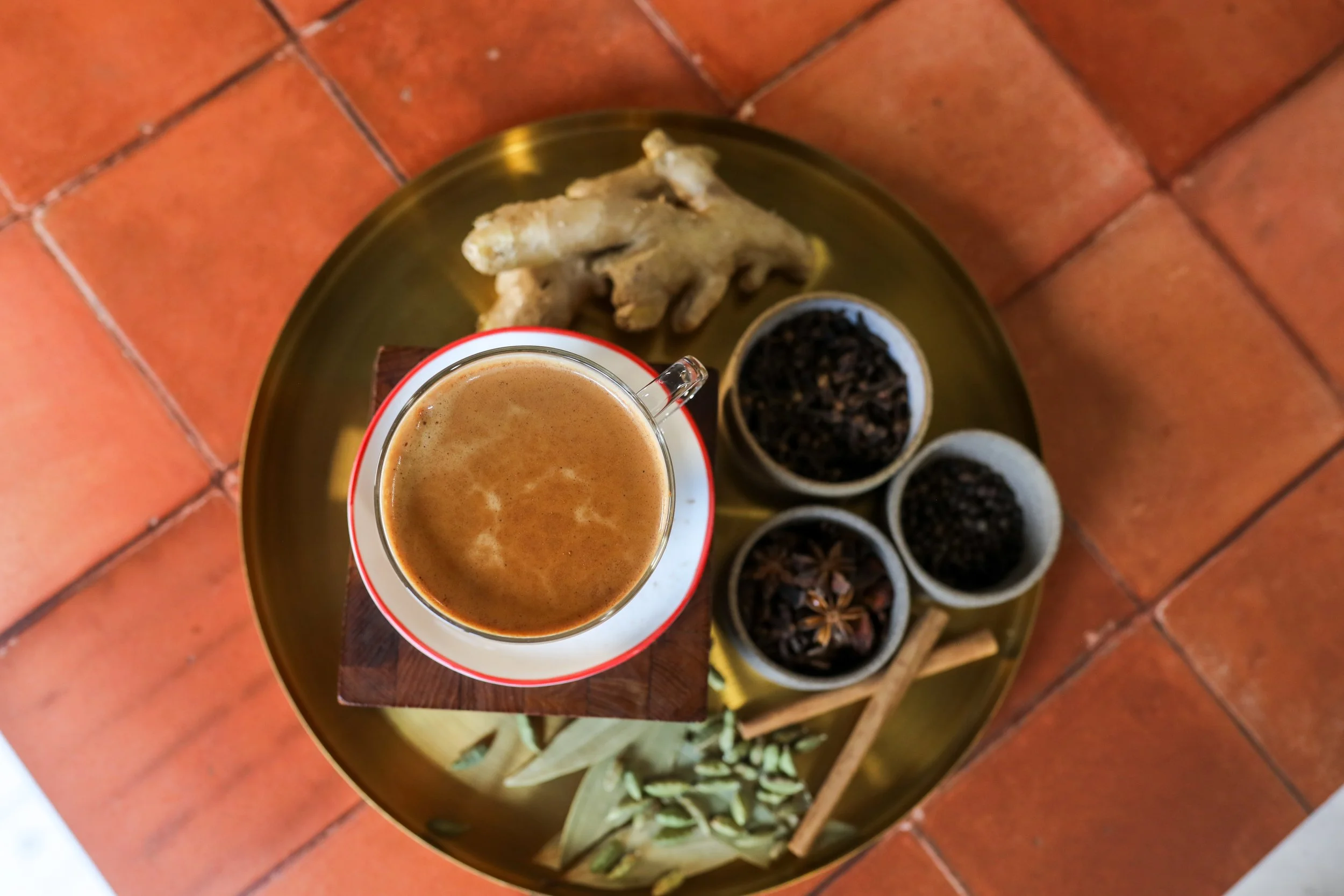
Chai Is CultureWalking the streets of Kolkata or Mumbai you’ll hear the calls of vendors beckoning you to get a kulhad of chai. These are chai wallahs or chai vendors, who are located throughout India. Getting chai this way is very popular but enjoying and offering a cup of chai to customers, visitors, and guests is ingrained in Indian culture.
Founder Pamela says chai is not just a drink, it’s a way of life. In her childhood in Kolkata, she would wake up to find her family enjoying breakfast over a cup of chai. Then again in the evening, gathering with family and friends would always feature kettles of chai. Welcoming guests with a cup is a key pillar in Indian hospitality. It’s a way to connect to one another and strengthen bonds.
These welcoming traditions around chai, both cultural and personal, is what Chaipolitan hopes to bring to all guests. We want everyone who comes in for a visit to feel that same sense of connection and community that has been passed down from generation to generation.
Nourish The SpiritNot only is chai delicious, it can also have some health benefits. Both the tea and spices used in making masala chai can help in a variety of ways. For one, chai is a rich source of antioxidants that can help boost your immune system. Black tea also contains flavonoids that help relax the blood vessels and improve blood flow.
Spices commonly used in chai, like ginger and cardamom, have been shown to have anxiolytic properties that can help reduce stress and anxiety. Additionally, masala chai spice mixtures have anti-inflammatory properties that can help reduce inflammation in the body. Next time you want to de-stress and relax – grab a cup of chai!
What about caffeine?
Chai contains less caffeine than a regular cup of coffee. (tea has about ½ the amount of caffeine found in a cup of coffee) But the bigger difference, the one you can feel, has to do with the way that the caffeine in tea is absorbed into the body. Caffeine interacts with the tannin in tea which has a calming effect on the nervous system. This causes the caffeine to be absorbed much more slowly, avoiding the caffeine jolt of energy. So go ahead and get that second (or third) cup of chai!
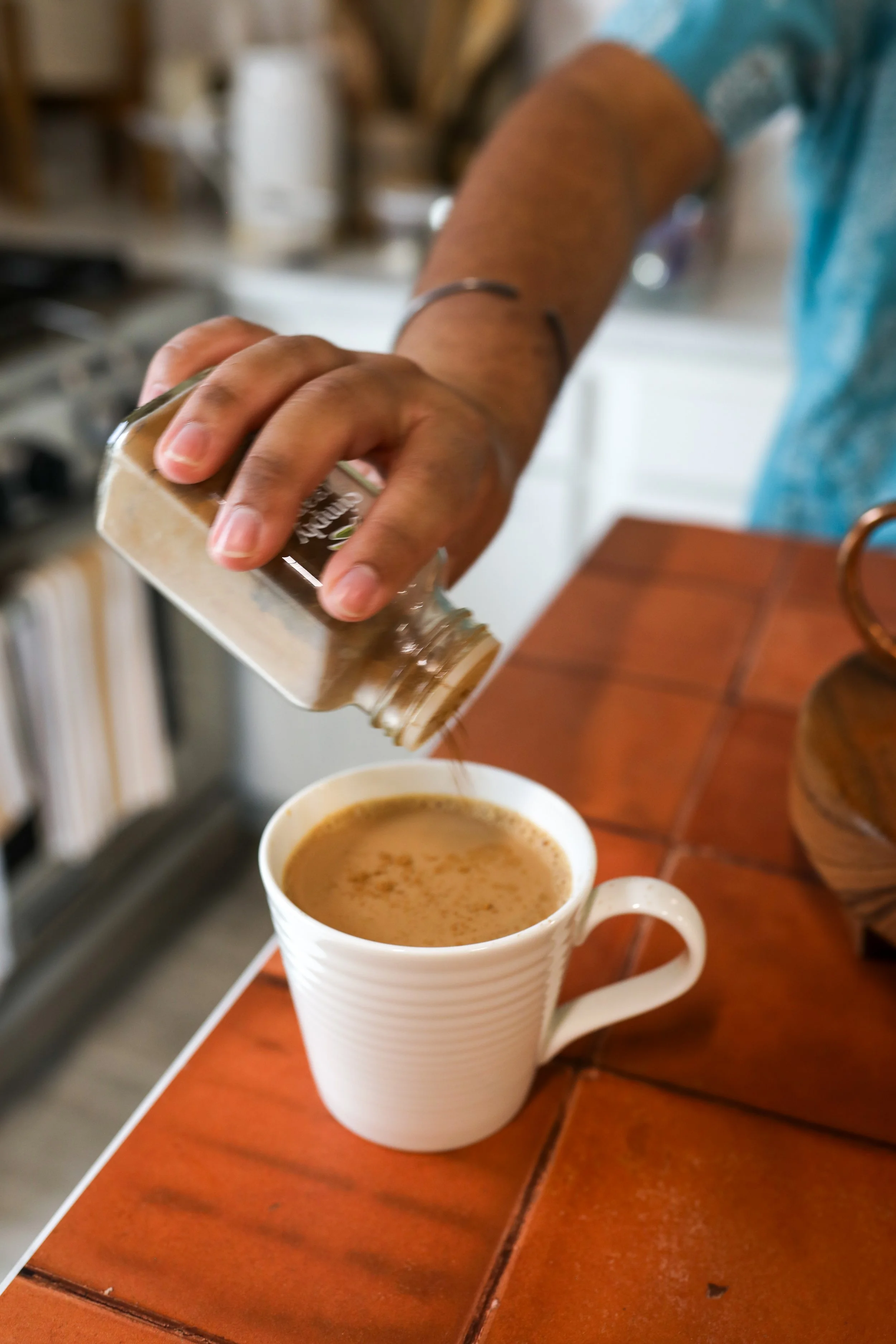
Pamela’s Masala Chai RecipeServes: 2 Cups
Ingredients
1 ¼ cup of water
1 cup of milk (whole, reduced-fat, oat milk or dairy substitutes)
Tip: Whole milk will provide the creamiest chai but dairy free options like oat milk can be a great choice!
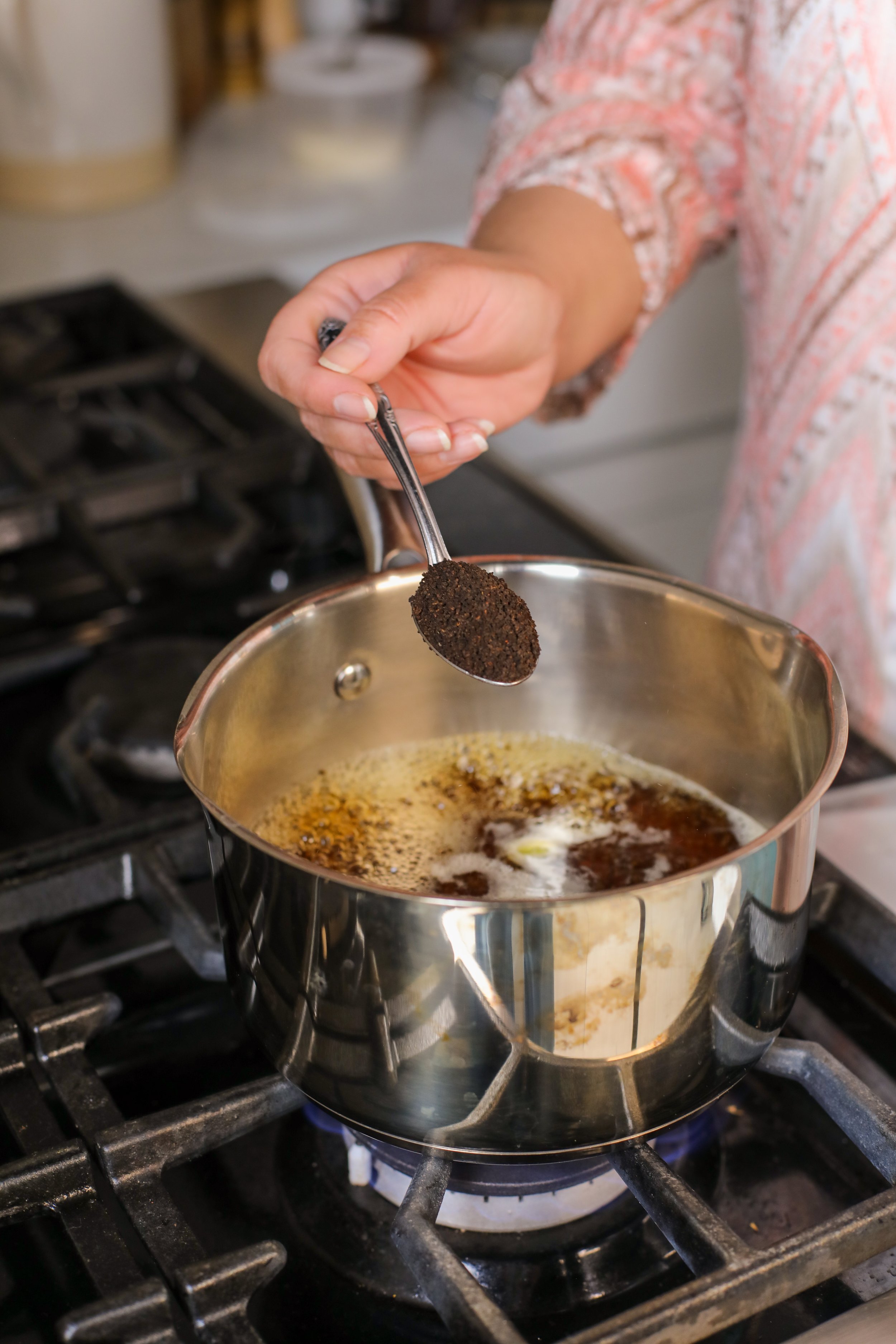
2 tsp of loose-leaf black tea (Assam or CTC)
1-2 tsp of sugar or sweetener (to taste)
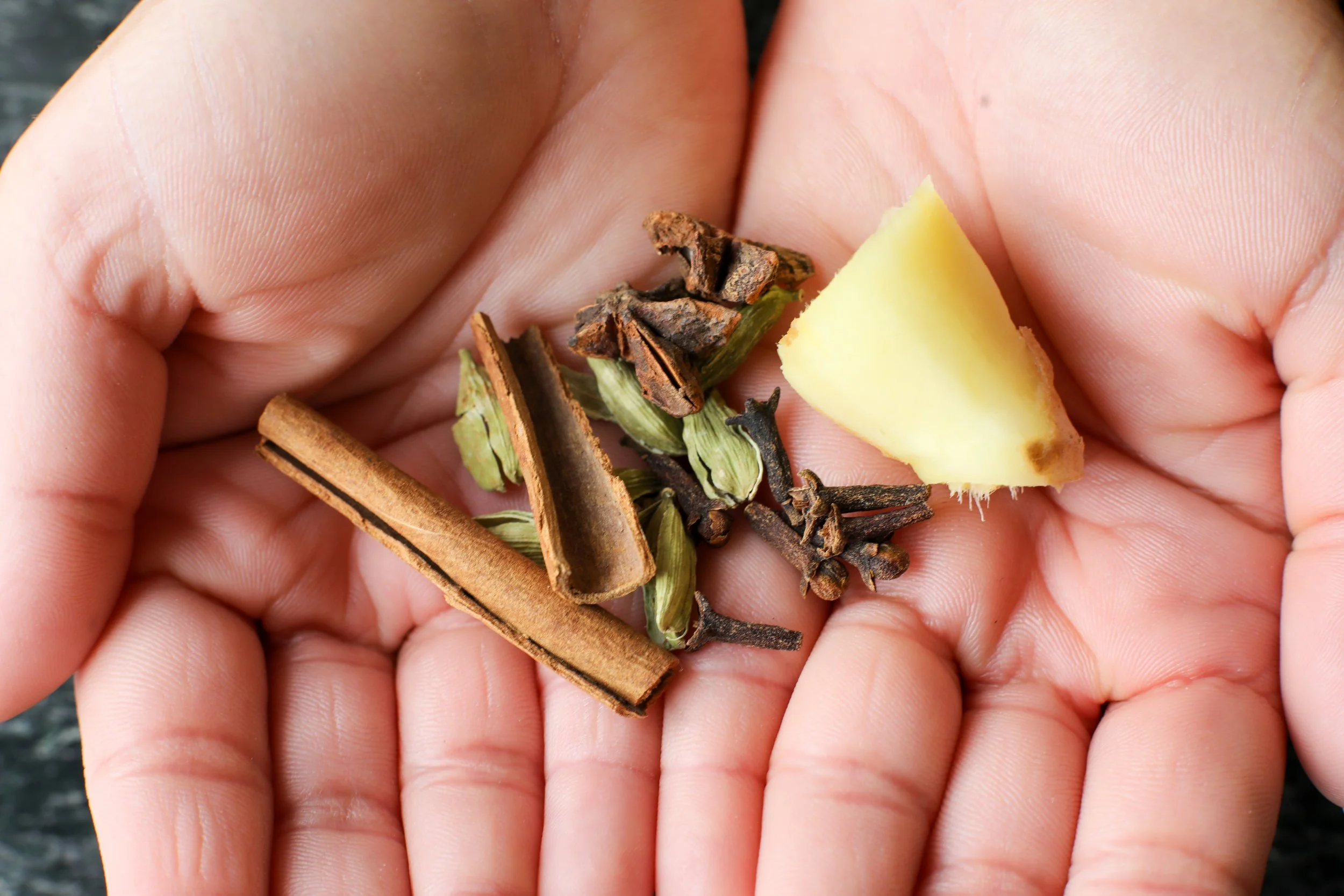
3 cardamom pods, lightly crushed
3 cloves, lightly crushed
1 piece of cinnamon stick
½ inch piece of ginger, crushed or grated
Tip: Crushing the ginger in a mortar and pestle yields great flavor!
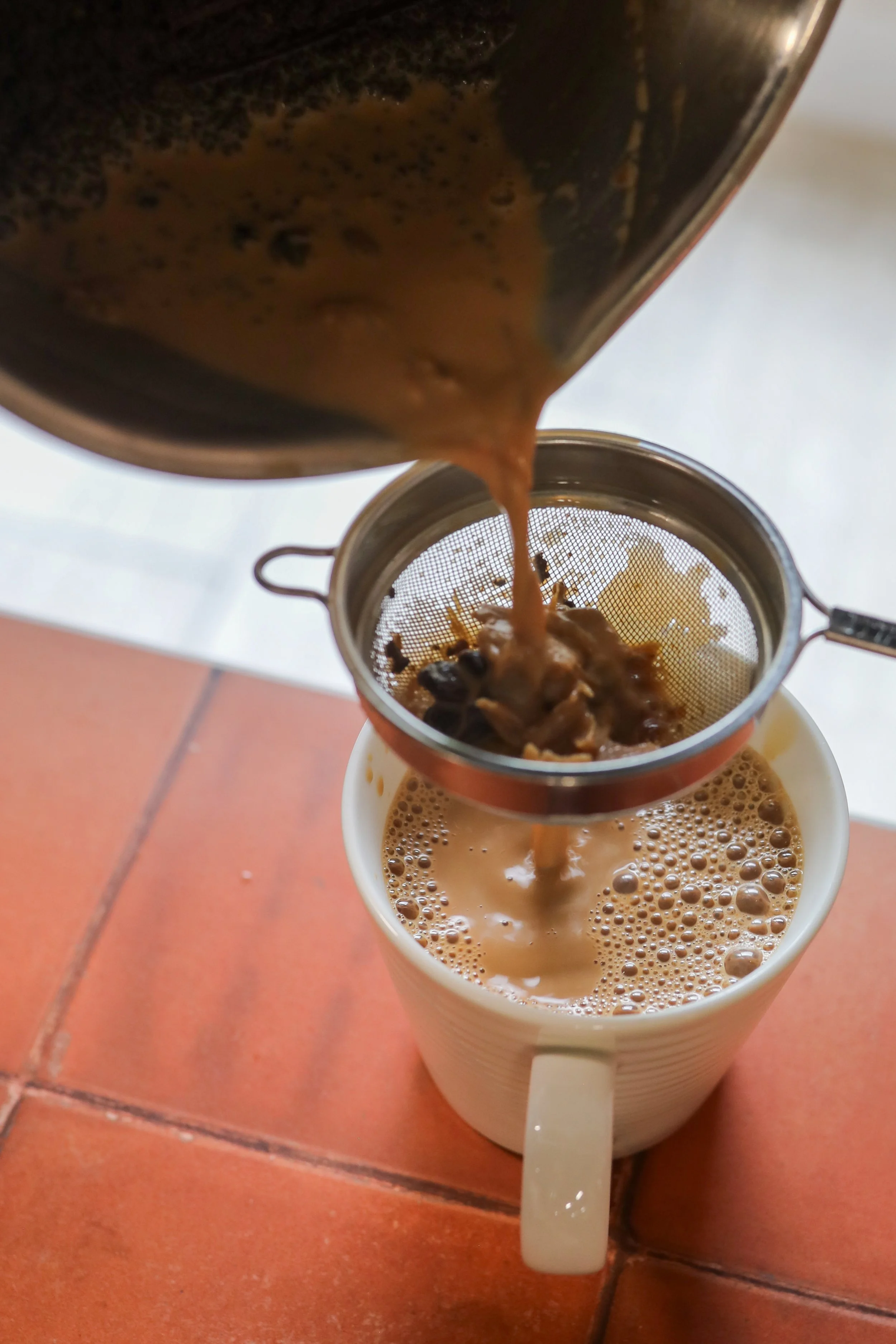
A fine-mesh strainer
Making The Chai
In a small saucepan, add 1 ¼ cup of water over medium heat. Then, add all your whole spices - cardamom, ginger, clove, and cinnamon - into it and bring it to a boil.
Add in the loose-leaf black tea, lower the heat and let the mixture simmer for 1-2 minutes so that the tea and the spices get enough time to infuse in the water.
Add the sugar into the mixture and continue simmering for another minute or so. You can substitute the sugar with any sweetener of your choice. But if you are using honey or maple syrup, add it when you have taken your chai off of the heat.
Add the milk and mix it all together until the chai comes to a full boil. After it boils, lower the heat and let it simmer for another 1-2 minutes.
Turn off the stove and use a fine-mesh strainer to strain the chai into your cup.
Serve and enjoy with baked goods or cookies or just a simple cake rusk!

Come for a Visit
Now that you’ve read a bit about chai, come chai it for yourself!